
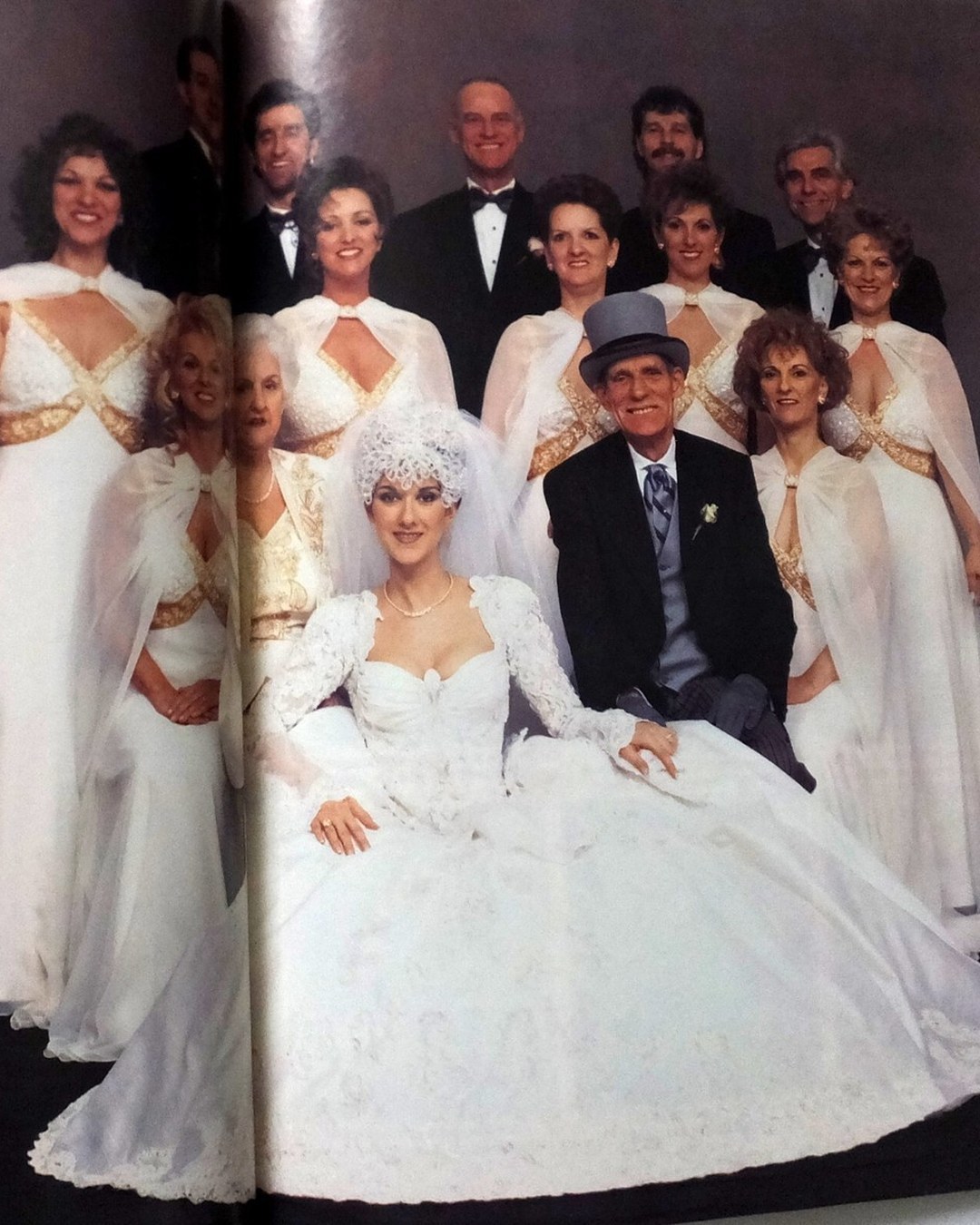
The wedding of Celine Dion and René Angélil took place in December 1994 at the Notre-Dame Basilica in Montreal. This specific location provided a grand, historic setting for a ceremony that was a major event in Canadian culture. The basilica is known for its Gothic Revival architecture, featuring deep blue ceilings decorated with golden stars and intricate wood carvings throughout the sanctuary. For a singer of Dion's international standing, the choice of such a massive and ornate venue was a reflection of her status in the music industry.
The event was not merely a private union but a public spectacle that drew significant attention from the media and the public alike. The scale of the building required a bridal look that would not be lost in the vastness of the space. Every element of the attire was designed to be visible from the back of the cathedral, ensuring that the visual impact reached every guest and camera lens present. This setting established the wedding as a landmark moment in the public record of the performer, blending the traditions of her home province with the high-production values of her global career.
The crystal construction
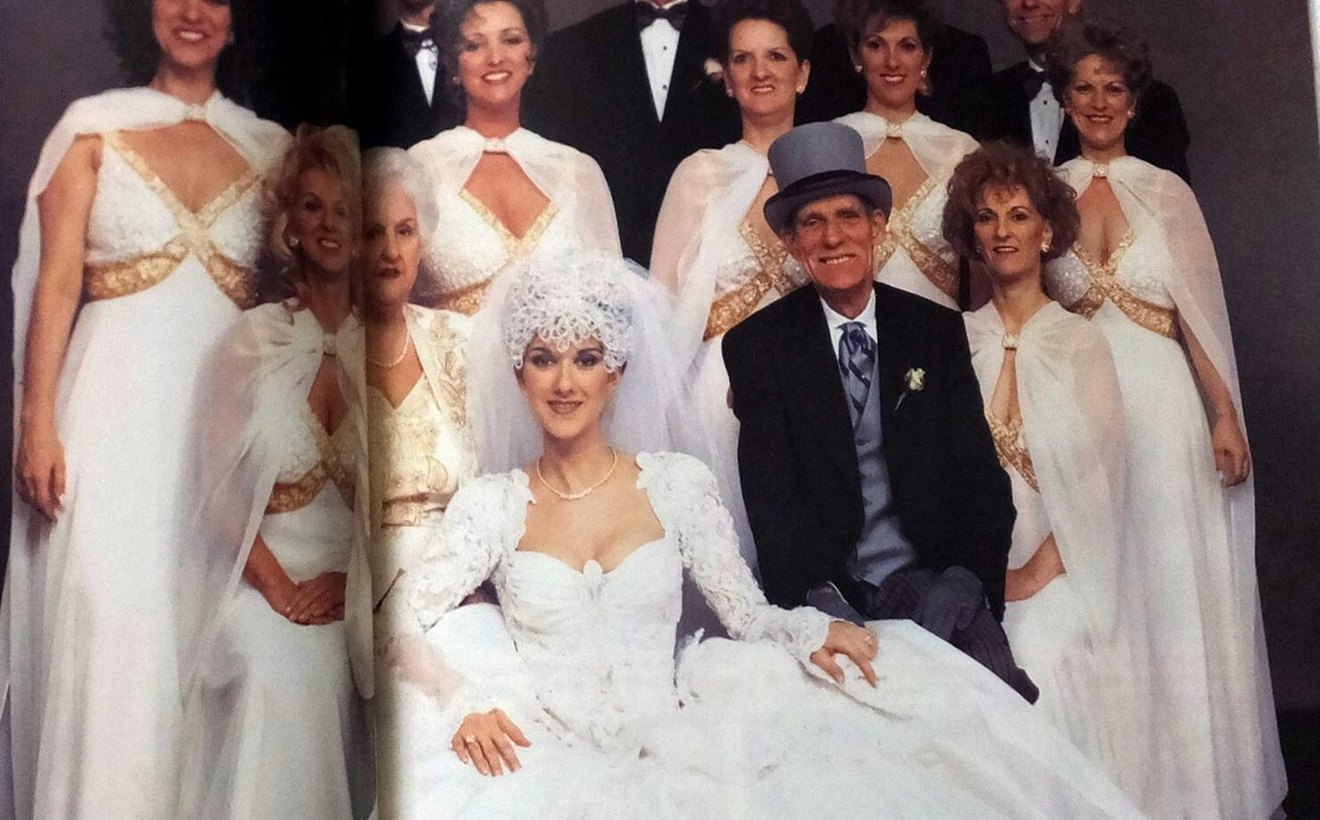
The most striking feature of the bridal ensemble was the headpiece. This accessory was a massive, crown-like structure encrusted with 2,000 Swarovski crystals. These crystals were arranged in a dense pattern to create a shimmering effect that would respond to the lighting within the basilica. The sheer number of stones added significant weight to the piece, which totaled seven pounds. In the world of high fashion and bridal design, a seven-pound accessory is an extraordinary burden for any individual to carry on their head for several hours.
For comparison, most formal headwear weighs only a small fraction of this amount. The design of the headpiece was intended to complement the lace and silk of the gown, but its scale made it the primary focus of the entire look. The use of Swarovski crystals ensured a high level of brilliance, making the headpiece visible even in the low light of the cathedral’s interior. This choice in materials represented a commitment to a specific aesthetic vision that prioritized visual drama over the physical ease of the wearer.
The hidden stability
Because the headpiece weighed seven pounds, it could not be secured with standard bridal combs or pins. The weight of the 2,000 crystals made the piece inherently unstable, posing a risk that it might shift or fall during the ceremony. To solve this technical problem, the tiara had to be sewn directly into the hair of the bride. This process involved using thread to anchor the base of the heavy structure into the hair, creating a permanent bond for the duration of the event. While this provided the stability required for the walk down the aisle and the long service, it also meant that the weight was concentrated on specific points of the scalp.
The secret physical pain behind this iconic look was a direct consequence of this attachment method. The constant pull of the seven-pound piece against the hair and skin created a level of discomfort that was entirely hidden from the public. There was no way to adjust or remove the piece without cutting the threads, meaning the bride had to endure the pressure for the entirety of the public appearance. This hidden physical strain was the price of maintaining the stability of the elaborate crystal crown. The look appeared effortless and regal to those watching, but the underlying reality involved a significant amount of physical endurance.
The lasting image
The 1994 wedding look remains a defining moment in the history of celebrity fashion and public ceremony. It serves as a clear example of the physical demands that often accompany the creation of a lasting visual legacy.