
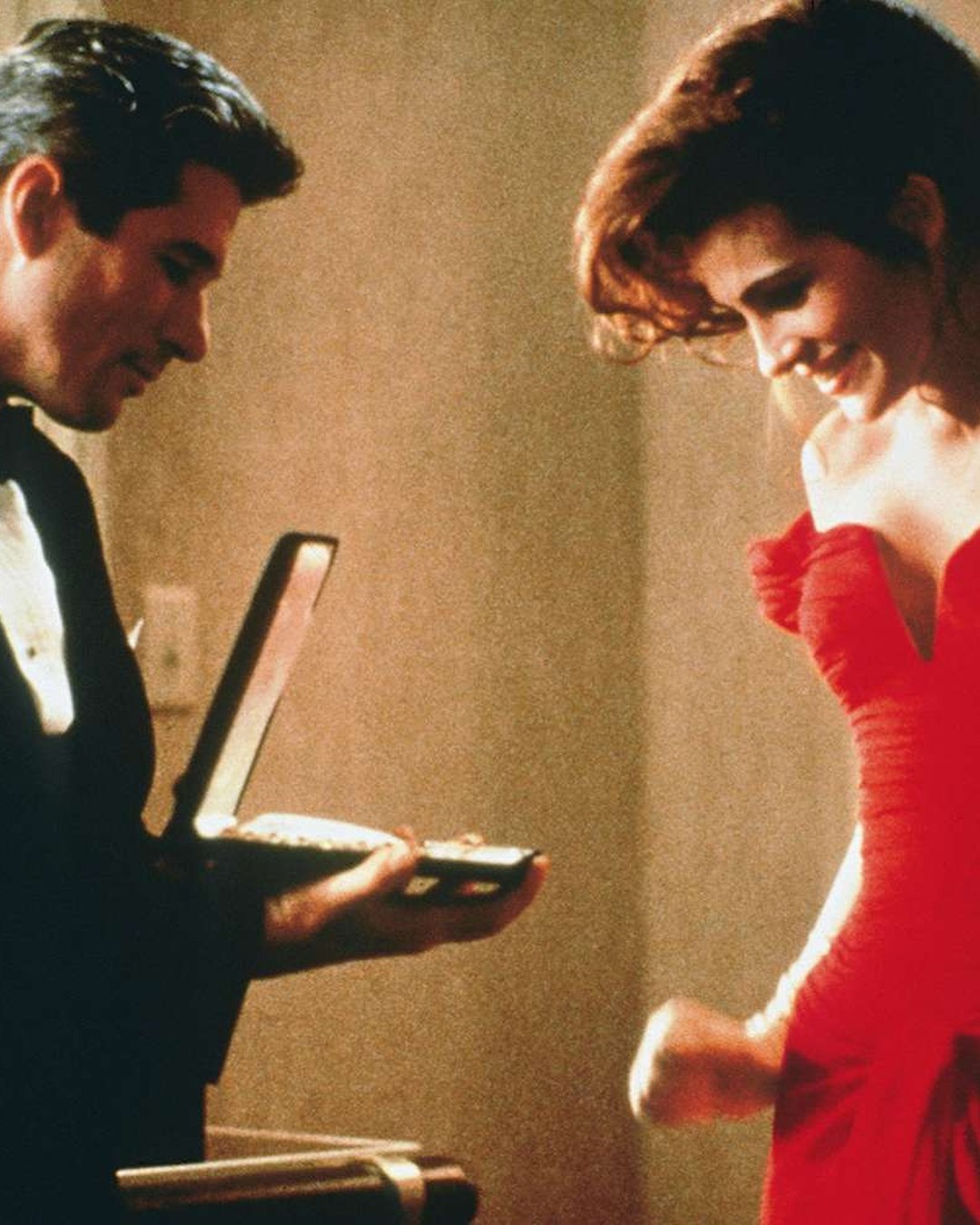
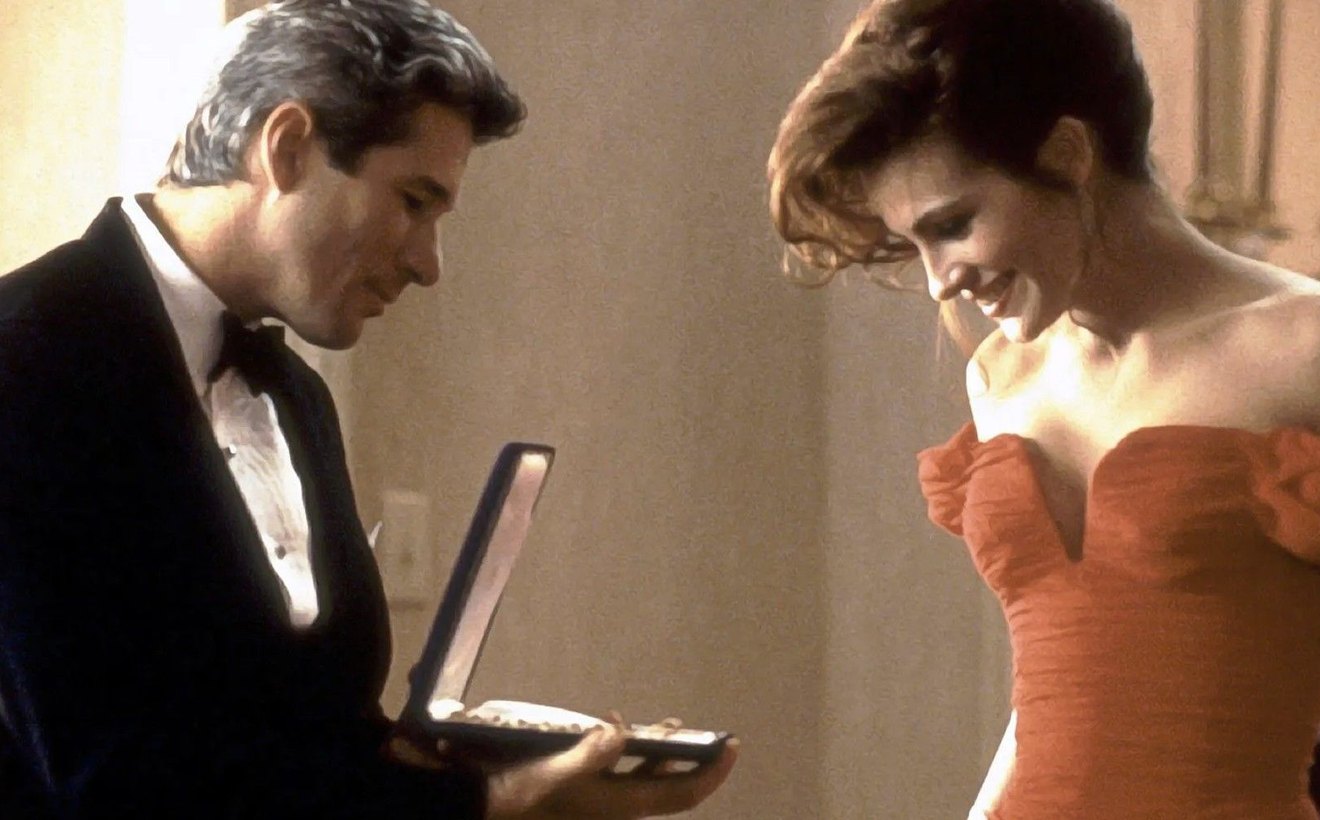
The jewelry box moment in Pretty Woman has become a shorthand for cinematic romance. In the film, Edward Lewis, played by Richard Gere, presents Vivian Ward, played by Julia Roberts, with a velvet box that opens to reveal a dazzling diamond necklace. The camera lingers on the box as it snaps shut, a gesture that has been replayed in countless retrospectives and parodies. At the time of filming, Roberts was twenty‑two, fresh from a breakthrough role in Mystic Pizza. Her youthful energy contrasted with Gere’s polished businessman demeanor, creating a visual chemistry that amplified the scene’s emotional weight. The sequence appears near the film’s climax, after a week‑long montage of the pair’s growing intimacy, and it signals a turning point in their on‑screen relationship. Audiences responded to the visual of the box closing with a mix of awe and anticipation, cementing the moment as one of the most recognisable romantic set‑pieces in modern cinema. The film itself was released in 1990 and quickly rose to become one of the decade’s biggest box office successes, cementing both leads as major stars. The scene is frequently referenced in later movies, television sketches and advertising, underscoring its lasting cultural imprint.
The real necklace
The necklace that glints inside the box is not a prop. It is a genuine piece of jewellery valued at two hundred and fifty thousand dollars. The diamond necklace was sourced from a high‑end jeweller and placed on set for the shoot. Its real weight and sparkle added an authenticity that could not be replicated with a costume replica. The cost of the piece was covered by the production’s budget, a decision that reflected the filmmakers’ commitment to visual opulence. The presence of a genuine, expensive necklace also heightened the stakes for the actors, who handled a valuable object while performing a scene that required multiple takes. The necklace’s later auction fetched a price that confirmed its material worth, but its cultural value has grown far beyond the original monetary figure. The necklace’s design features a single pendant of flawless cut surrounded by a halo of smaller stones, a style popular among high‑society jewellery of the late 1980s. The piece was insured for its full value throughout production, a standard precaution for high‑value items on set.
The prank that changed it
The snap of the jewelry box was not written into the script. Director Garry Marshall suggested that the crew capture an unscripted reaction by having the box close abruptly as Gere placed his hand on it. The sudden snap was intended as a light‑hearted prank on the set, a way to break the tension of a long day of filming. When the box closed, Roberts’ hand was caught for a fraction of a second, prompting a startled laugh from the cast and crew. The camera continued rolling, preserving the genuine surprise. The moment was kept in the final cut, turning a practical joke into a defining cinematic beat. The decision to retain the unscripted snap illustrates how spontaneous energy can become integral to a film’s narrative texture. The prank also demonstrated Marshall’s willingness to blur the line between direction and play, a hallmark of his comedic style. The spontaneous snap contributed to the scene’s rhythm, giving the camera a natural pause before the reveal.
What remains
The jewelry box scene endures as a symbol of Hollywood’s blend of glamour and mischief. Its legacy is built on a real diamond, a youthful star, and a prank that turned into an iconic gesture.