
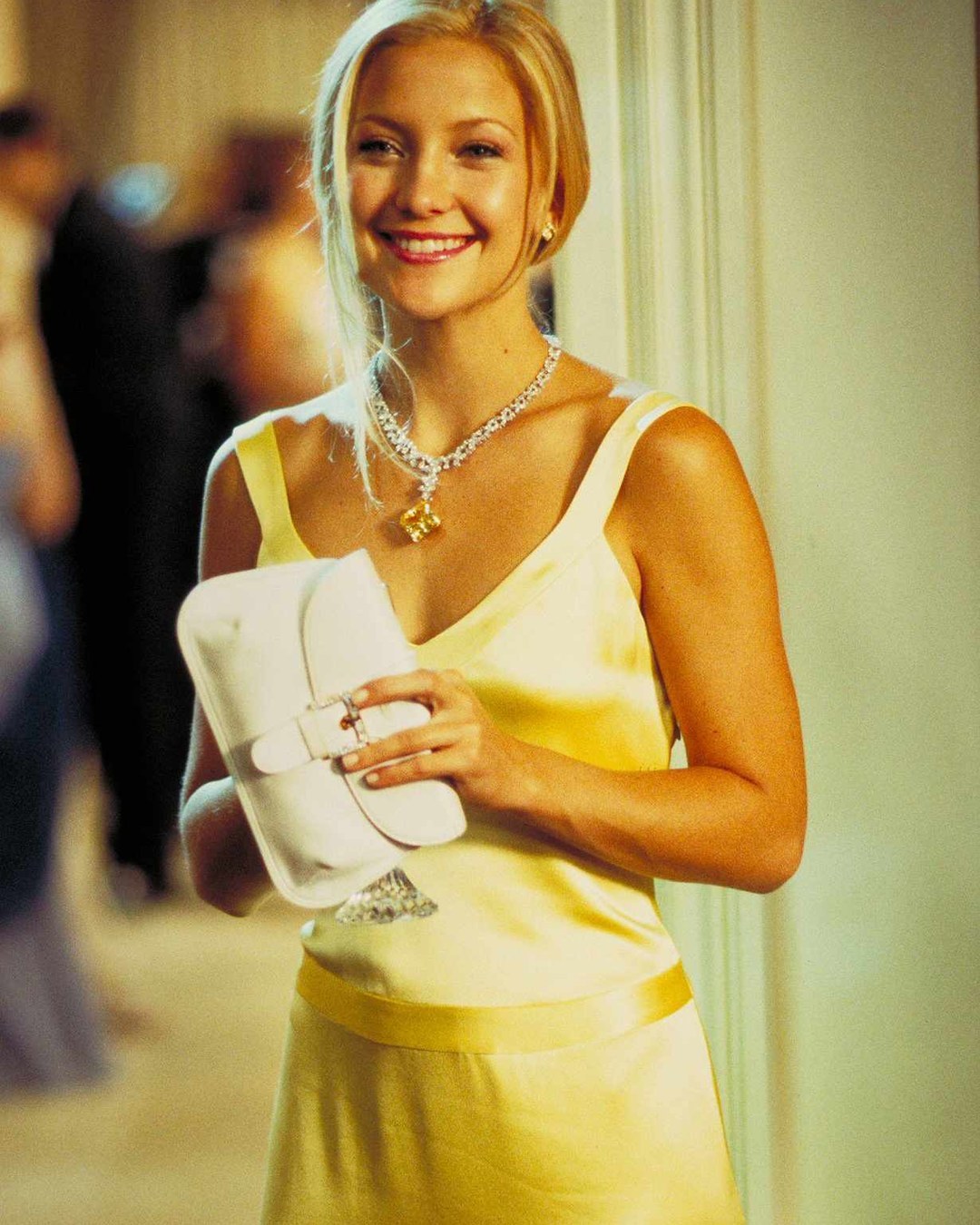
The production of the 2003 romantic comedy How to Lose a Guy in 10 Days centered a pivotal scene on a high-stakes gala event. This moment required a visual anchor that would signify wealth and elegance. That anchor was not the clothing, but a piece of high jewelry. The Isadora diamond is an 84-carat yellow gemstone. Its value reached into the millions of dollars, making it one of the most expensive items ever used on a film set.
In a reversal of standard costume design, the jewelry existed before the garment. The necklace dictated the aesthetic requirements for the entire look. The stone possesses a specific saturation and clarity that required a neutral but supportive background. These physical properties became the absolute reference point for the costume department. Every choice made regarding the appearance of Kate Hudson in this scene followed the requirements of the diamond. The size and weight of the gemstone meant it needed a secure setting and a dress that could balance its physical presence. The diamond was the primary subject, and the dress was the frame.
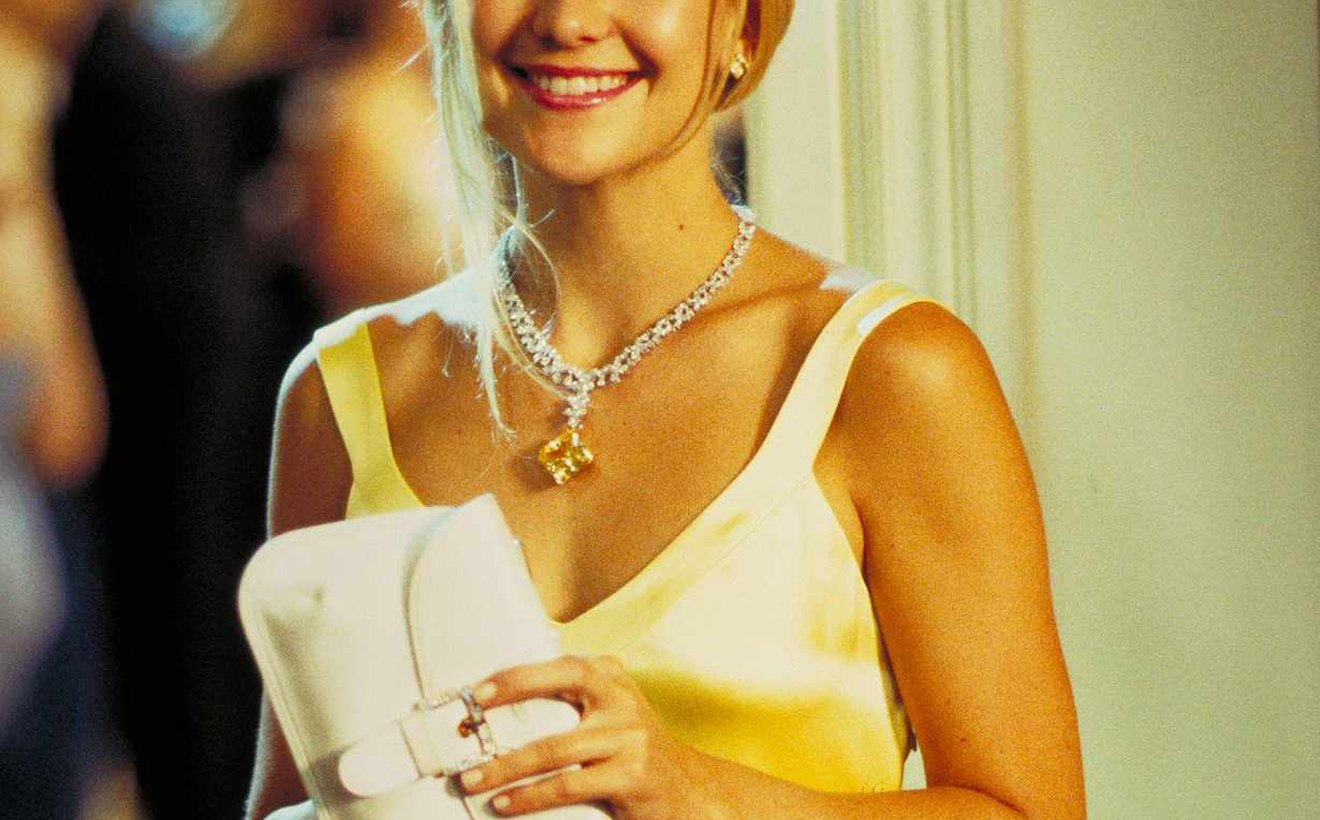
The custom Dina Bar-El gown
Dina Bar-El designed the dress specifically for the film with the Isadora diamond in mind. The design process was a technical challenge. The silk material underwent a custom-dyeing process to achieve a precise color match. This ensured the yellow shade of the fabric complemented the 84-carat stone rather than clashing with it or diminishing its brilliance. The resulting butter-yellow hue became the defining characteristic of the garment.
The gown features a floor-length skirt and a minimalist bodice. Its most distinct feature is the low-cut, crisscross back. This design choice served a functional purpose. It allowed the necklace to sit against the skin without visual competition from heavy fabric or complex patterns. The silk reflects light in a way that parallels the facets of the gemstone. The construction of the dress focused on clean lines and a bias-cut silhouette. This simplicity directed all attention to the jewelry and the wearer. The fabric had to be heavy enough to drape correctly but light enough to move fluidly during the dance sequences in the film.
Kate Hudson and cinematic style
Kate Hudson portrays Andie Anderson, a journalist for a women’s magazine. The film follows her attempt to drive a man away within ten days for an article. The gala scene serves as the narrative climax where the characters confront their true feelings. Hudson is widely recognized for this role and this specific costume. The image of the yellow dress became a primary marketing tool for the production and appeared on the theatrical posters.
It represents a departure from the typical trends of the early two-thousands. While other films of the era featured heavy embellishment or experimental cuts, this look utilized classic evening wear principles. The collaboration between the jewelry house and the costume designer created a cohesive visual identity. The dress became a reference point for formal wear in cinema. Its presence in the film provides the central visual memory for the audience. The character's transition from casual office attire to this formal look marks a significant moment in the story's progression. The dress stands as a recognizable point in the career of the costume designer and the actor. It established a standard for the yellow dress trope in romantic comedies.
The lasting fashion legacy
The butter-yellow gown remains a primary example of how jewelry can define a cinematic wardrobe. This collaboration between a multi-million dollar diamond and custom silk created a permanent entry in the history of film fashion.